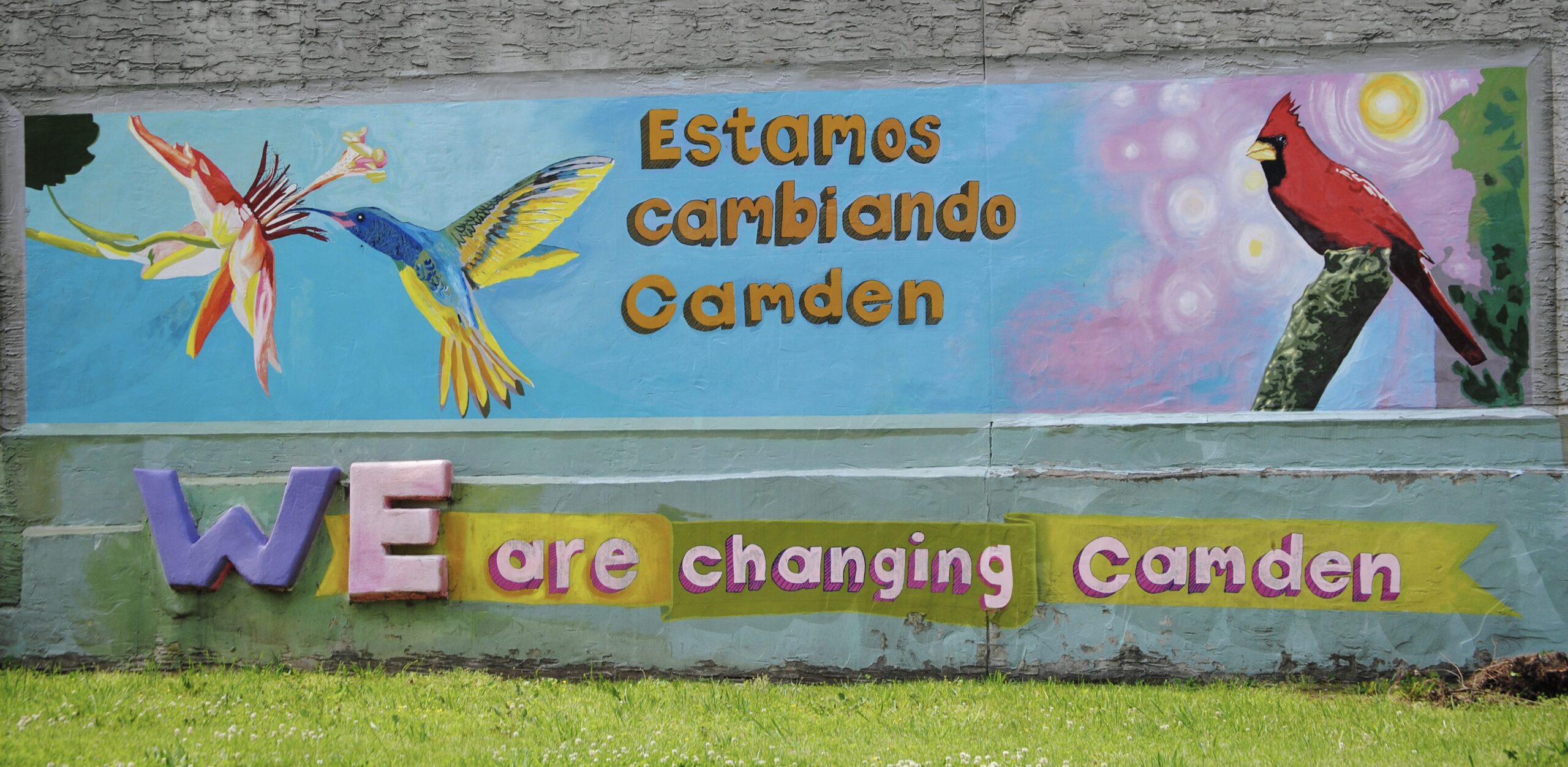
After overcoming a stage-4 cancer diagnosis several years ago, Jacqueline Maria Santiago-Vicente got a second chance at life. Ever since then, she’s been working to do the same for her city.

But the community leader fully admits there was a time when she gave up and turned her back on Camden.
“I’m very honest with anyone who ever asks me,” Santiago-Vicente said. “I’ve been a social worker and teacher for almost 40 years now. I just got tired of putting bandages on everything.”
About 20 years ago, she said the drug and crime situation in her neighborhood had gotten so bad that she felt helpless to do anything about it, and more importantly, she was frightened for the safety of her children.
She said she moved to Chicago to get away from the problems in her home town and to try and start a new life.
But after about 12 years away, she received devastating news. She was diagnosed with an aggressive cancer and she decided her best chance at medical care would be at home in New Jersey.
Home to Heal
Despite undergoing intensive treatments, her outlook quickly worsened. But it was at that point, when things seemed bleakest, that everything started to change.
“During chemotherapy, I’m here, I’m sitting at my mom’s house, I look across the street,” she said, recalling her experience on Byron Street in North Camden. “There were two abandoned houses and I see some people working there.”
Calling herself a nosy person, she said she was worried someone was trying to break into one of the vacant houses, so she went out to investigate.
Out on the street, she said she met Jessica Franzini, who works with The Heart of Camden organization, who explained how that non-profit organization was working to improve the block.
“I said, ‘you know what, I’m in the middle of chemo right now, but when I get better, I’m going to volunteer with you,’” she recalled.
But Santiago-Vicente remembered that even though she said it, she didn’t really believe she’d ever get better. Her prognosis had recently taken a turn for the worse and she was actually thinking more about the end of her life.
She said a vacant lot there on the same block was at one time where her grandmother’s house stood, and if she died, she wanted her family to plant a tree on it as a way to remember her.
But she survived her battle with cancer and instead of a single remembrance tree, she grew gardens in that spot, and in many others, and she created multiple programs that teach others to do the same.
“Now I’m at 25-30 lots all over Camden,” she said. “So I’m still here. I’ve planted many trees.”
Beginning to Grow
That lot began what she’d later dub the Byron Gardens and led to her forming North Camden Community Gardens in 2017, with the mission of beautifying the city one vacant lot at a time.
“If it’s about greening and cleaning, I’m there,” Santiago-Vicente said.
She said she doesn’t own the properties she works on and said most of the lots she beautifies have been vacant five to 10 years.
“I’m what they call a guerilla-gardner,” she said. “I just beautify spaces that don’t belong to me.”
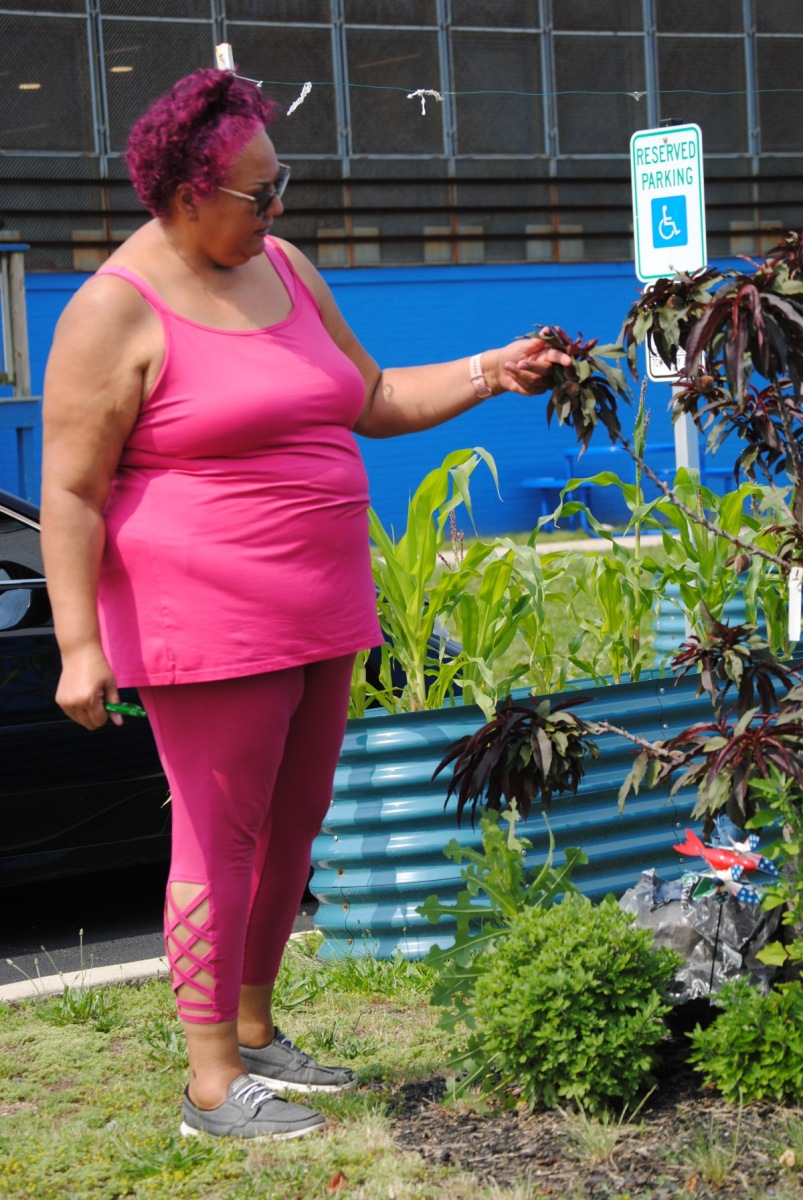
Santiago-Vicente now operates as the Neighborhood Collaborative Community Gardens, a non-profit she runs as its executive director.
“This is the way I look at it – either I leave it there abandoned and complain about it being abandoned and littered, or I keep it clean and it makes my neighborhood pretty,” she said.
Through the help of volunteers, paid interns, and collaborations with other groups and government departments, Santiago-Vicente’s organization gets the litter and debris that’s been dumped in vacant lots cleared away. In place of the trash they plant flowers, fruits and and vegetables in gardens as a way to beautify the neighborhood and create civic engagement from neighbors.
“I’m able to do amazing things because I have amazing people that I work with in my community,” she said. “Camden is much more than the negativity. Now granted, I’m not saying that we don’t have social ills, but everything is not just doom and gloom.”
Branching Out
Through a seemingly unending list of programs and initiatives, the organization works to empower local residents by showing how it can be done and by providing resources where they can.
“As long as you’re participating in being a steward of your community, I’m there for you,” Santiago-Vicente said. “If I have it, you have it. That’s my motto.”
A big part of the group’s mission is environmental and agricultural education, largely carried out through their garden internship program for high school and college students.
Santiago-Vicente said the program will typically see 10 to 15 kids in the program at any given time.
“I do it as a work-study program,” she said. “Any grant funding that I get, I pay my students first. I want to value the work that they do.”
But they do have to work for it, she said, and they also have to maintain their studies and keep out of trouble if they want to stay in the program
“In order to be in my program, you have to be a scholar,” she said. “I don’t deal with students who have behavioral issues. They have other programs that do that.
“I concentrate on students that are striving to go to the next level. No one gets paid unless they get their education done and their grades are where they’re supposed to be.”
Along with working in the gardens, students also go to farm markets, where they sell fertilizer they’ve made and even raise funds for the group by working as face painters. They also go into the schools to teach younger kids about their programs, bringing with them educational coloring books they’ve created themselves to teach the elementary students about gardening and the environment.
Roadblockks Ahead
Despite all the success she’s had, there is potential trouble on the horizon. Her organization relies largely on grants to operate, and recent changes in Washington are threatening to alter or eliminate those sources.
She fears she may have to scale back on her mission, either in the number of lots she works to beautify or the number of kids in her program, if she can’t find some alternative funding to the grants that are being cut.
“I take it day by day,” she said. “What can you do?”
Given her history, how far she’s gotten and how she ended up there, it seems likely there’s one thing Santiago-Vicente won’t do, and that’s give up.
“Everything happens for a reason,” she said. “I think I was supposed to get sick to do this new journey. I do this because I love my community.”
To learn more about the work Sntiago-Vicente is doing through the Neighborhood Collaborative Community Gardens, visit them online at www.nccgardens.org.