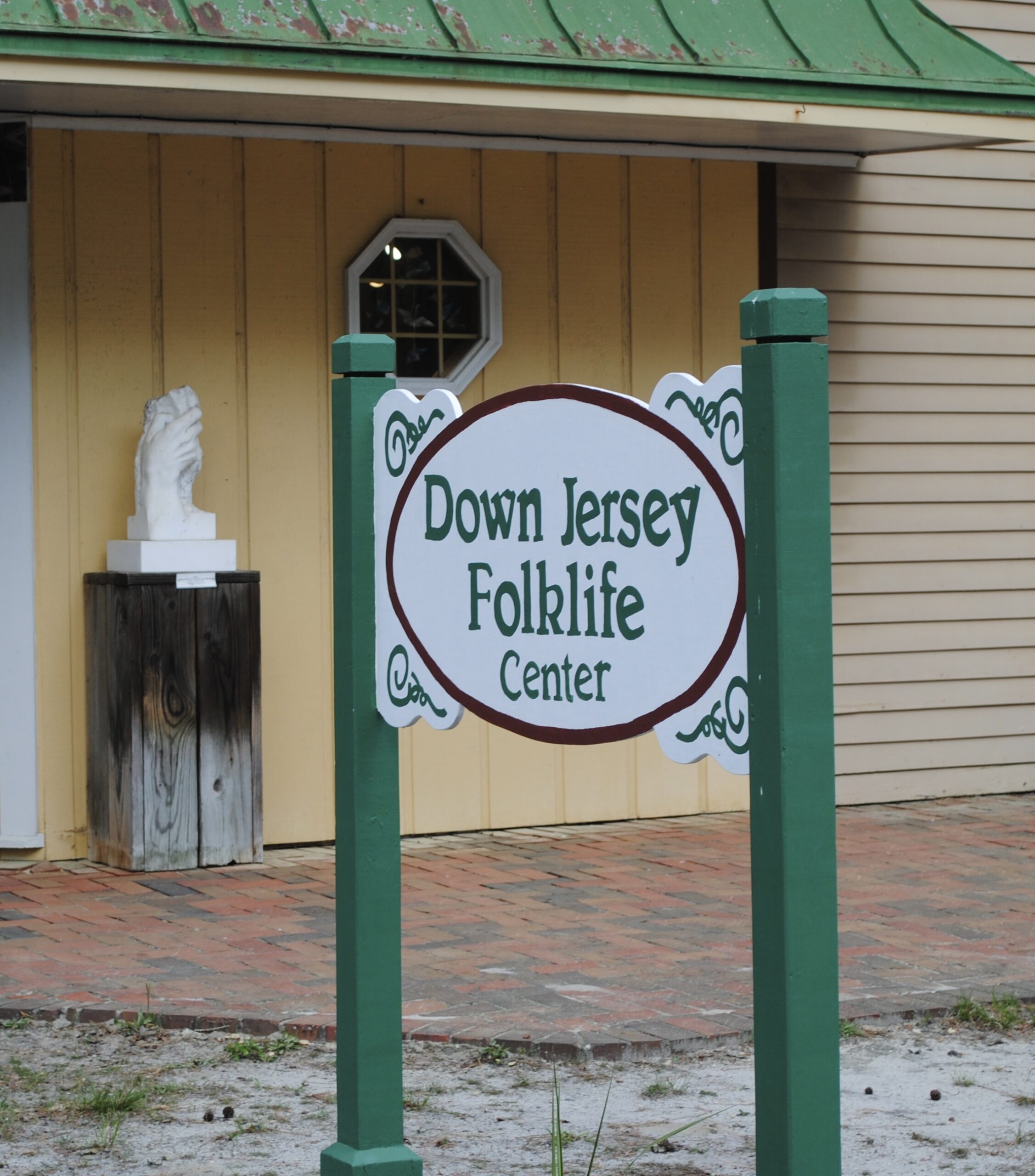
Through the end of this year, the Folklife Center at WheatonArts in Millville is running the exhibit “Communities and Cultures of Down Jersey,” which offers a “cross-cultural exploration of folk and traditional arts” in our region.
The following is our Q&A interview with Iveta Pirgova, the Director of the Folklife Center, who explains the mission of the center and what our readers can expect if they visit the museum this month.

South Jersey Local (SJL):
For someone who might be new to the Down Jersey Folklife Center and its mission, what would you want them to know about its current exhibition — Communities and Cultures of Down Jersey?
Iveta Pirgova (IP):
“Down Jersey” is an old term for the southern part of New Jersey. It may date back to an 18th century sailors’ term for fishing grounds located “down the Jersey shore.” Down Jersey encompasses the eight southern counties of New Jersey. However, Down Jersey is much more than a geographic location; it is also made up of the people who live here. Residents of South Jersey come from backgrounds as varied as the landscape. Some have families who trace their lineage to 17th century farmers and fishermen and some are Native Americans whose ancestors hunted, fished, trapped and farmed in our area for many thousands of years. Yet, other people have come much more recently to live and work in our area. But each resident of South Jersey contributes to the culture that makes “Down Jersey” an identifiable and unique place to live.
The multi-cultural landscape of our region offers a rich variety of stories, experiences and practices, which have become an integral part of the Down Jersey living traditions and artistic expressions. These are the traditions of our families, friends, neighbors and colleagues and they are all part of our South Jersey home.
SJL:
The exhibit is described as a “cross-cultural exploration of folk and traditional arts.” Through this exhibit, the Folklife Center’s overall work, or your own research, what would you say are some commonalities that can be found across cultures, and in what ways are they visible through the art on display in this exhibition?
IP:
The folk and traditional arts are rooted in and reflective of the cultural life of a community. Community members may share a common ethnic heritage, language, religion, occupation, or geographic region. These vital and constantly reinvigorated artistic traditions are shaped by values and standards of excellence that are passed from generation to generation, most often within family and community, through demonstration, conversation, and practice. Folk and traditional arts reflect the commonly shared knowledge, beliefs, aesthetics and values of the community that recognize them as part of their cultural heritage.
The current displays feature cultures of many communities that share a common identity (ethnicity, nationality, age, gender, or religion), a commonplace (neighborhood, town, city, and region) or a common interest (occupation/profession, environment and nature preservation, health, social care, etc.). We also highlight the creative process and the individual artistic interpretations of ideas, beliefs, materials or techniques. Many of the artworks encourage further thoughts on the relevance of the “authenticity” concept in the past and present day context of adaptation and fusion of cultural elements.
SJL:
This particular exhibit has been running since April and will soon be closing. With the experience coming to an end, what have been some commonly recurring questions or comments you and your staff have heard about the exhibition during its run?
IP:
Most of our visitors truly appreciate the creativity, aesthetics and the stories behind the objects on display. For some of them the age of the traditional artists is a surprise because they still think of the traditional arts as something of the past and do not expect people in their 20s and 30s to be actively engaged with these art forms. For some others, the variety of art forms itself is like a discovery of yet another aspect of South Jersey. Many of them share with us how the exhibition has made them come to a new understanding not only of the region, but also about their own cultural backgrounds as well.
SJL:
Going into the new year, can you give any indication as to what people can expect next at the Down Jersey Folklife Center?
IP:
Next year we will continue to explore cross-cultural themes and feature artworks aiming to highlight both similarities and differences between the local cultures. We will continue reminding our visitors what culture is and that presenting artworks in a cultural context means that for each culture we feature we need to understand and properly interpret what and how people think of themselves and the world around them, what they believe and what they value, including social, aesthetic and artistic values.
SJL:
Is there anything else you’d like to add about this exhibit, the Folklife Center, or anything else?
IP:
We would like our visitors to have a better understanding of what tradition means.
The word tradition is often used in the public discourse to describe conservative forces associated with the past that are never changing, thus blocking innovations, creativity and progress. Such use of the word has become a source of prejudice against various traditions and of inability for properly understanding the true value and aesthetics of the traditional arts.
In the field of cultural studies, the word tradition has a complex meaning. Even though it is a noun, it carries the connotations of its Latin root tradere – to give, to deliver, to hand down. Handing down tradition preserves, expresses and communicates the past to the present and future. We define tradition as culture’s dynamic, as the process by which culture exists. It can refer to the process of preservation and continuation as well as to the things that need to be preserved and passed on. In other words, tradition both reflects and contributes to the continuity of human cultures.
THE EXHIBIT RUNS THROUGH DECEMBER 28
Visit https://www.wheatonarts.org/


