By Danielle D’Aquila
Across the country, National Native American Heritage Month is observed in November and locally there were special events held around the region focusing on the history and heritage of South Jersey’s original people.
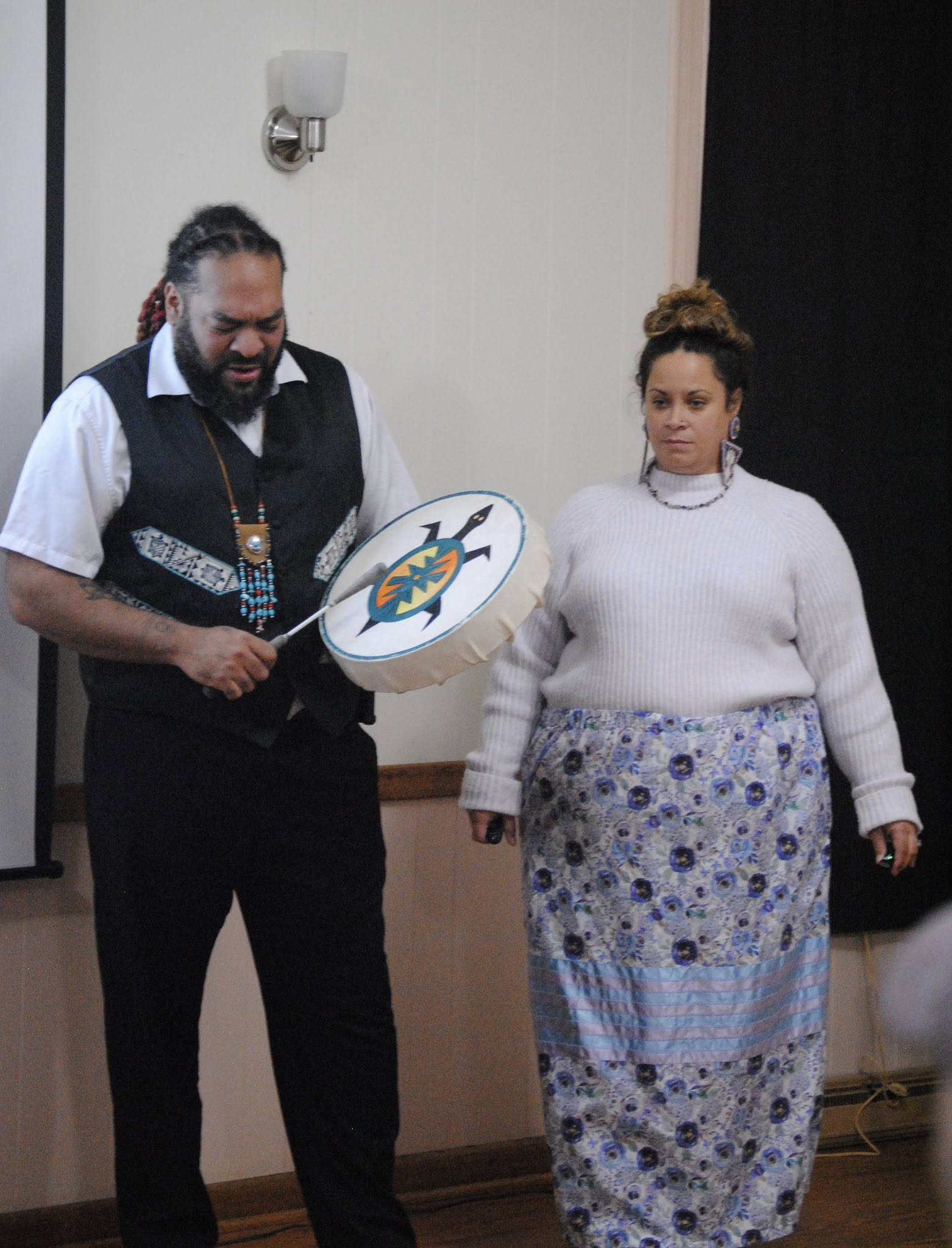
One event we had the honor of attending was a lecture entitled “Indigenous Ways: Matriarchy, Food Sovereignty and Feet Planted in Both Worlds,” hosted by the Harrison Township Historical Society at The Richwood Academy Cultural Center.
The guest speakers, Lia “Watching Sparrow” Gould and Ty “Dancing Wolf” Ellis, are citizens of the Lenni-Lenape Nanticoke Nation and activists within the Lenapehoking Reestablishment Project.

The organization, founded in 2014, promotes Lenape history, culture and awareness, and supports tribal youth.
The pair acknowledged the people that helped them pave the way for starting this project, like Gould’s father, former Chief Mark “Quiet Hawk” Gould, as well as her mother, Gail, who passed away a few years ago.
“She just made it her mission to provide that voice for the youth, to make sure their needs were met, to bring resources to them and to really showcase the up-and-coming generations,” Gould said of her mother.
Gould also credited Ty’s mother and said his passion for life was taught by her. She also recognized Ty’s grandmother, Lorraine, one of their community’s genealogists. Gould recalled how she worked tirelessly to make sure information and records were kept.
She collected and tracked things like birth dates, death dates, military records – anything, Gould said, that would “give us that evidence to show that we were here.”
By mentioning all the women who were pivotal in preserving their culture and supporting new generations, Gould noted how indigenous people are a matriarchal society.
“Though my dad was the Chief, and he was the face of our people, there have always been a council of elder women that were in the background that were really making the decisions,” Gould said.
For Gould, the lessons she learned from those elders in her community not only shaped her activism today, but also the career path she chose to follow.
“I am a nurse by trade and part of that stems from my childhood teachings that were passed down from those clan mothers or the elder women of our community,” she said. “Them sharing that information with us about the struggles of our community, some of the adversity that we face, and that’s what drove me to the medical field so that I could bring some of that knowledge back to our community.”
The lecture also discussed food sovereignty, nature conservation and the effects of losing access to land and waterways that the native community was previously able to utilize.

“We would have people that would spend every weekend out hunting so that they could make sure the people of the community had food to last them over the winter,” she said. “There’s very little land out there that we’re allowed to just freely go out and hunt and fish, so taking away the access to those lands has kind of taken away our sense of community.”
In an effort to bring back that sense of community, Gould said their organization is building community gardens and leading food sovereignty workshops during their youth retreats.
“We lost so much when things were taken away from us, so being able to have that ability to bring back that sense of community and having children of a young age understand the importance of that helps strengthen our community,” she said.
Gould and Ellis also touched on the balance that they try to pass on to the youth between living in today’s society, while maintaining a connection to their culture and traditions.
Ellis spoke of the unique challenges facing indigenous people when it comes to simply defining their own identity.
“We’re the only minority that has to prove who we are on paper,” Ellis said. “It’s not just to prove it to the government, it’s not just to prove it to our friends, but it’s also to other communities, other tribal communities.”

The pair discussed their involvement with UNITY, United National Indigenous Tribal Youth, and the annual conference held by the group, where they often travel with local youth.
The UNITY conferences focus on sharing indigenous culture, while focusing on career goals and mental health. They believe that it helps the kids understand that they can do anything.
“Living in a modern society, and trying to give them resources, college resources, we want to push them to go further and to think about their futures,” Ellis said.
For more information about the Lenapehoking Reestablishment Project, visit their
website at www.lrproject.org.